Multi-factor authentication
For local accounts, the portal can require a password followed by a registered
TOTP authenticator or WebAuthn credential. An external OAuth, SAML or LDAP
provider's own MFA is a separate policy at that provider; require mfa does not
turn an upstream login into a local enrollment workflow.


Enrollment creates a factor; login proves its use. A local user enrolls and verifies an authenticator through an allowed live Profile session. A subsequent login must complete the selected password and factor checkpoints. Only verified authentication evidence can satisfy an application rule requiring that factor. A required-enrollment setting or saved authenticator is not completed MFA.
Enabling MFA
Add this fragment to an otherwise working local portal:
transform user {
    match realm local
    require mfa
}
Match the store's realm, not just the fact that it is a local store. Start with the first application, then enable MFA for its local realm. Keep application roles and signing keys unchanged while testing the additional checkpoint.
Without an explicit challenge policy, local login normally requires a password
and any configured MFA. require mfa adds the MFA requirement, including enrollment
when no usable token exists. Creating a token changes credential state: enrollment
is not proof that a subsequent login checkpoint has passed. Complete a fresh
login with the newly registered method.
For a deliberate passwordless or ordered-method policy, use authentication challenges. A password-only fallback explicitly weakens that policy; choose it only when intended.
Add MFA Authenticator Application
For an already signed-in local user with authp/user or authp/admin, open
/auth/profile/, then choose MFA and add an authenticator application. First-login
enrollment may instead appear in the sandbox flow when the policy requires it.
- Use HTTPS and confirm that you are enrolling the intended account.
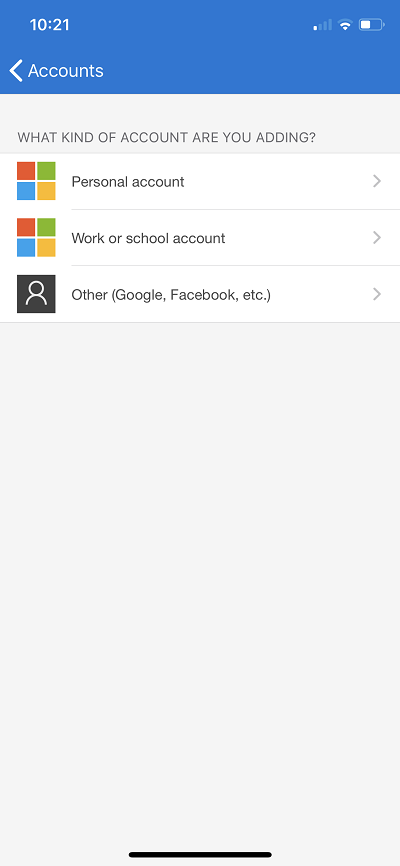
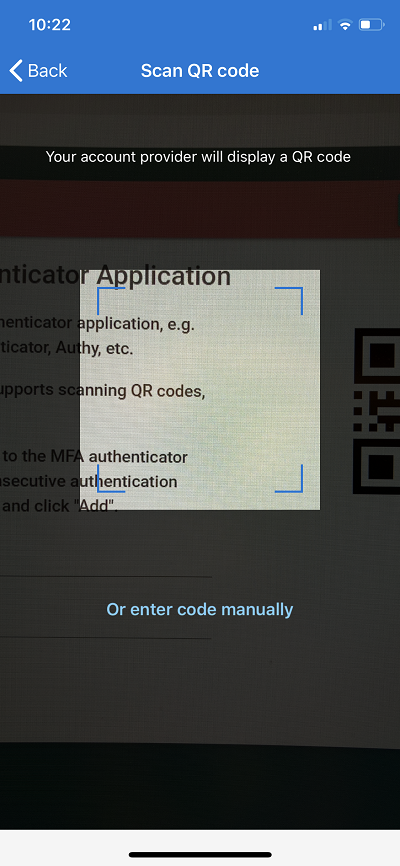
- Add an account in a TOTP application and scan the new QR displayed by your own portal, or enter its secret manually.
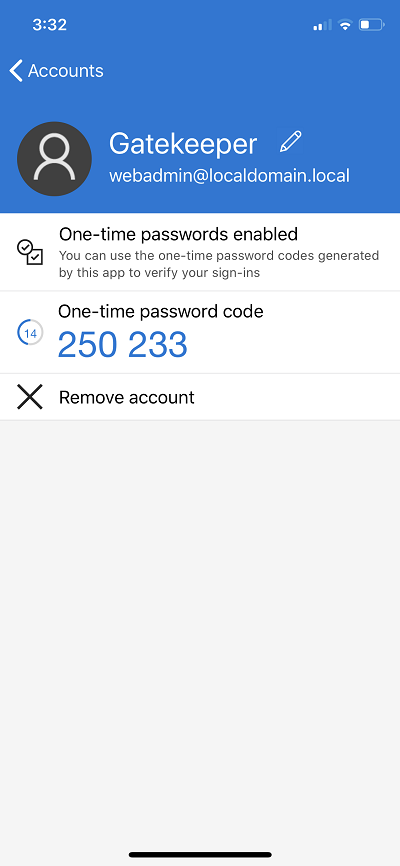
- Give the token a recognizable comment and submit the verification code requested by the current form. The current profile form uses one code; the historical form below requested two consecutive codes.
- Finish enrollment and sign in again. Confirm that a password alone does not complete login, a wrong/expired code is rejected, and the current code succeeds.
The provisioning URI follows the authenticator key URI format. Synchronize the server and authenticator clocks. The enrollment secret and QR are credentials; the historical demonstration below must never be reused as a real account's secret.
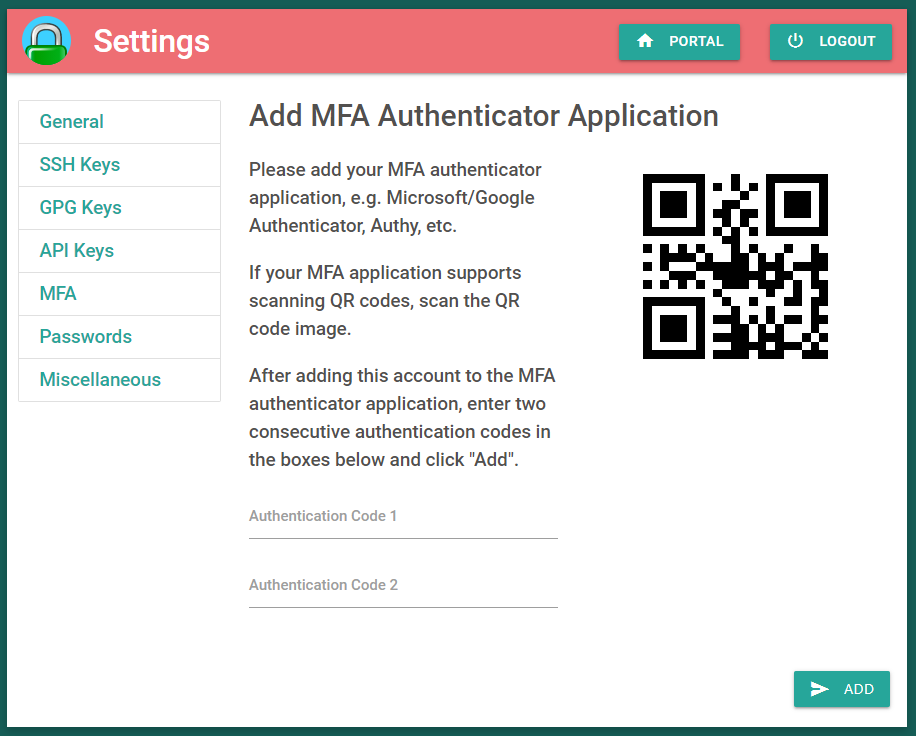
/profile/ and its TOTP form differs; use the QR and verification fields displayed by your running release.Historical Microsoft Authenticator enrollment sequence
Hardware tokens and passkeys
WebAuthn enrollment and assertion require a secure browser origin. Keep the
portal hostname stable; credentials are bound to its relying-party identity.
The historical u2f keyword selects this hardware/passkey checkpoint. Issuing
an assertion challenge alone does not complete authentication.
Test the actual browser and device combinations you support. A discoverable
passkey is not an automatic promise of username-free login in this portal.
Maintain a reviewed recovery process with a local administrator; the released
/recover handler does not implement a complete password or MFA recovery flow.
Agentic Prompts
Copy a prompt into your LLM to explore this topic. Each prompt prioritizes upstream repository guidance and code over this page, and asks for version-aware reasoning.
Separate enrollment and authentication
Help me understand Multi-factor authentication.

Primary authorities (take precedence over website documentation):
https://github.com/greenpau/caddy-security/blob/main/AGENTS.md
https://github.com/greenpau/caddy-security/tree/main/.codex/skills
https://github.com/greenpau/go-authcrunch/blob/main/AGENTS.md
https://github.com/greenpau/go-authcrunch/tree/main/.codex/skills
Read each repository's root AGENTS.md first, then any scoped AGENTS.md that
applies to inspected paths. Read the relevant SKILL.md files and follow their
implementation and test references.

Relevant skills to locate: authentication-portal-mfa,
authentication-portal-challenges,
configuration-authentication-user-transforms.

Secondary reference:
https://docs.authcrunch.com/docs/authenticate/mfa

If a source is inaccessible, ask me to paste its relevant text. Identify the
versions your answer applies to; main may be newer than my release. Resolve
disagreements using code and tests, and flag unverified claims. Use synthetic
credentials and redacted examples; explain proposed checks before any changes.

Explain require mfa for a local realm, first-login enrollment, and a fresh
factor-verified login. Contrast this with upstream provider MFA. Show why a
registered authenticator or an added role is not evidence that a checkpoint
succeeded.
Compare TOTP and WebAuthn
Help me understand Multi-factor authentication.

Primary authorities (take precedence over website documentation):
https://github.com/greenpau/caddy-security/blob/main/AGENTS.md
https://github.com/greenpau/caddy-security/tree/main/.codex/skills
https://github.com/greenpau/go-authcrunch/blob/main/AGENTS.md
https://github.com/greenpau/go-authcrunch/tree/main/.codex/skills
Read each repository's root AGENTS.md first, then any scoped AGENTS.md that
applies to inspected paths. Read the relevant SKILL.md files and follow their
implementation and test references.

Relevant skills to locate: authentication-portal-mfa,
authentication-portal-challenges,
configuration-authentication-user-transforms.

Secondary reference:
https://docs.authcrunch.com/docs/authenticate/mfa

If a source is inaccessible, ask me to paste its relevant text. Identify the
versions your answer applies to; main may be newer than my release. Resolve
disagreements using code and tests, and flag unverified claims. Use synthetic
credentials and redacted examples; explain proposed checks before any changes.

Explain the verification assumptions for a TOTP app and a WebAuthn credential:
secret/time versus secure origin/relying-party identity. Distinguish
hardware/passkey support from a promise of username-free login. Use synthetic
examples and never request an enrollment secret.
Diagnose a factor failure
Help me understand Multi-factor authentication.

Primary authorities (take precedence over website documentation):
https://github.com/greenpau/caddy-security/blob/main/AGENTS.md
https://github.com/greenpau/caddy-security/tree/main/.codex/skills
https://github.com/greenpau/go-authcrunch/blob/main/AGENTS.md
https://github.com/greenpau/go-authcrunch/tree/main/.codex/skills
Read each repository's root AGENTS.md first, then any scoped AGENTS.md that
applies to inspected paths. Read the relevant SKILL.md files and follow their
implementation and test references.

Relevant skills to locate: authentication-portal-mfa,
authentication-portal-challenges,
configuration-authentication-user-transforms.

Secondary reference:
https://docs.authcrunch.com/docs/authenticate/mfa

If a source is inaccessible, ask me to paste its relevant text. Identify the
versions your answer applies to; main may be newer than my release. Resolve
disagreements using code and tests, and flag unverified claims. Use synthetic
credentials and redacted examples; explain proposed checks before any changes.

Help me investigate a local user stuck at enrollment or a failed factor
checkpoint. Ask about realm matching, registered method, server/authenticator
clock, browser origin, and selected challenges. Separate wrong/expired
assertion from unavailable-method policy and unsupported recovery UI.
Design fresh-login tests
Help me understand Multi-factor authentication.

Primary authorities (take precedence over website documentation):
https://github.com/greenpau/caddy-security/blob/main/AGENTS.md
https://github.com/greenpau/caddy-security/tree/main/.codex/skills
https://github.com/greenpau/go-authcrunch/blob/main/AGENTS.md
https://github.com/greenpau/go-authcrunch/tree/main/.codex/skills
Read each repository's root AGENTS.md first, then any scoped AGENTS.md that
applies to inspected paths. Read the relevant SKILL.md files and follow their
implementation and test references.

Relevant skills to locate: authentication-portal-mfa,
authentication-portal-challenges,
configuration-authentication-user-transforms.

Secondary reference:
https://docs.authcrunch.com/docs/authenticate/mfa

If a source is inaccessible, ask me to paste its relevant text. Identify the
versions your answer applies to; main may be newer than my release. Resolve
disagreements using code and tests, and flag unverified claims. Use synthetic
credentials and redacted examples; explain proposed checks before any changes.

Plan cases for a new account, enrolled factor, password alone, wrong/expired
TOTP, WebAuthn on the wrong origin, and stronger challenge policy. Explain
which observations show enrollment and which prove completed factors. Use
disposable accounts only.
Review a fallback decision
Help me understand Multi-factor authentication.

Primary authorities (take precedence over website documentation):
https://github.com/greenpau/caddy-security/blob/main/AGENTS.md
https://github.com/greenpau/caddy-security/tree/main/.codex/skills
https://github.com/greenpau/go-authcrunch/blob/main/AGENTS.md
https://github.com/greenpau/go-authcrunch/tree/main/.codex/skills
Read each repository's root AGENTS.md first, then any scoped AGENTS.md that
applies to inspected paths. Read the relevant SKILL.md files and follow their
implementation and test references.

Relevant skills to locate: authentication-portal-mfa,
authentication-portal-challenges,
configuration-authentication-user-transforms.

Secondary reference:
https://docs.authcrunch.com/docs/authenticate/mfa

If a source is inaccessible, ask me to paste its relevant text. Identify the
versions your answer applies to; main may be newer than my release. Resolve
disagreements using code and tests, and flag unverified claims. Use synthetic
credentials and redacted examples; explain proposed checks before any changes.

Compare require mfa with an explicit ordered challenge policy and a
password-only fallback. Ask what level of assurance I require and how recovery
is administered. Quiz me on why Basic or API-key authentication cannot
manufacture interactive-factor evidence.
Source Code References
Start with the code search, then follow the parser, runtime, and tests relevant
to this topic. These links target main; use GitHub's branch/tag selector to
compare them with your installed release.
- Search this topic in both repositories — searches topic-specific symbols and paths across both codebases.
- caddy-security: caddyfile_authn_transform.go — adapts user-transform matchers, actions, and required challenges.
- go-authcrunch: pkg/authchal/config/check.go — selects an ordered sequence from available authentication methods.
- go-authcrunch: pkg/authn/authentication_challenges.go — checks direct credential login against resolved challenge requirements.
- go-authcrunch: pkg/authn/webauthn_enrollment.go — binds WebAuthn enrollment to account and browser state.
- go-authcrunch: pkg/authn/mfa_enrollment_e2e_test.go — tests local MFA enrollment and authentication behavior.
- go-authcrunch: pkg/authn/authentication_challenges_sequence_e2e_test.go — tests ordered authentication sequences through portal requests.